


The Peptide (BPC-157 peptides) Bandwagon and the Faustian Trap: Why "Buy Now, Pay Later" Biology Is a Fool's Game

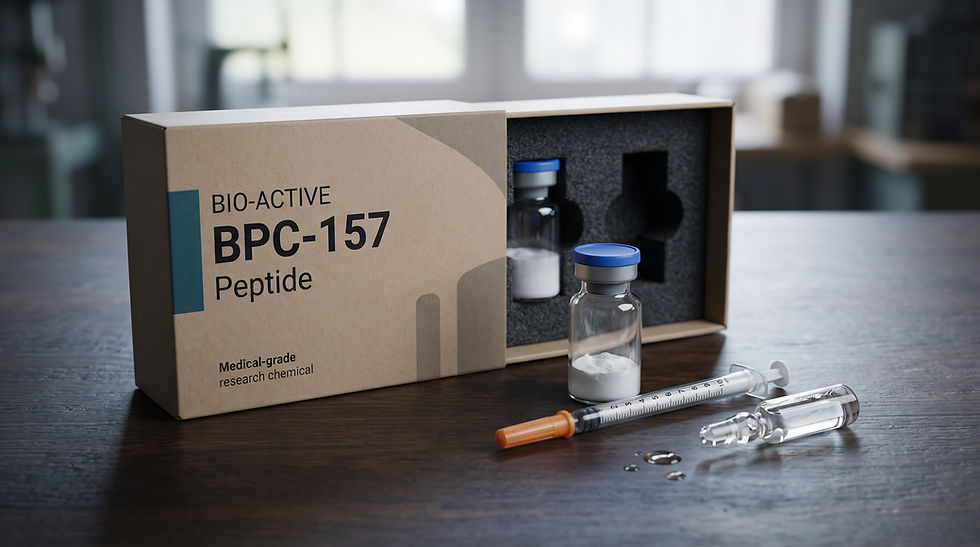
BPC-157 Peptides: What's the Fuss?
A few days ago, an email landed in my inbox from an earnest reader. Her message was brief, inquisitive, and emblematic of a conversation currently echoing across gym floors, corporate lunchrooms, and cycling clubs throughout the country:
"Hi Gary, quick question: have you had any experience with peptides? Amino acids? BPC-157 and other ‘stacks’ you can put together? Still pretty experimental. Just wondering if you have come across them. My workmate is right into them, saying they are amazing, life-changing..."
I receive variations of this inquiry almost weekly. If it is not BPC-157, it is another designer peptide; if not peptides, it is Testosterone Replacement Therapy (TRT); and before that, it was an endless procession of pills, powders, and high-tech gadgets. The refrain never changes: an ordinary, well-meaning person has a colleague, training partner, or favourite internet personality who insists that the fountain of youth has finally been distilled into an injectable liquid, and that to abstain is to be left behind in the dark ages of un-optimised human frailty.
I have deliberately taken my time before commenting publicly on this matter. In a culture driven by instant gratification and algorithmic outrage, it is invariably wiser to step back, observe the currents, and assess not merely what is being promoted, but precisely who stands to profit from the promotion.
Having watched health fads come and go for the better part of five decades, I can assure you that we are not witnessing a scientific renaissance. We are watching the inexorable operation of a commercial conveyor belt—and a thoroughly modern iteration of the oldest, most perilous trap known to humankind.
The Anatomy of the 5-to-8-Year Carousel
As I explored in my article on Healthy Ageing or Anti-Ageing? Beware of the Gurus, every consumer product, including commercial pharmaceuticals and wellness therapies, is bound to an economic life cycle that typically spans between five and eight years. The trajectory is predictable enough to set your watch by:
First comes the breathless introduction, championed by fringe biohackers, underground forums, and avant-garde athletes. Then follows the exponential ascent, fuelled by social media influencers, wellness gurus, and podcast hosts who suddenly discover that this particular substance is "game-changing." Next, the market reaches saturated maturity; margins compress as cheap imitations flood the internet, and consumers begin to notice that the promised miracle has failed to fundamentally transform their lives. Finally comes the inevitable decline into irrelevance, regulatory intervention, or outright consumer disillusionment.
At that point of decline, the commercial enterprise behind the machine faces an existential dilemma. Businesses that have grown fat on the spoils of the previous wonder-cure cannot simply shut up shop and advise their customers to go for a brisk walk, eat liver, and get eight hours of deep sleep. There is no money in sensible living. They must, by financial necessity, unearth the next shiny object, assemble the next bandwagon, and manufacture a fresh multi-billion-dollar windfall.
A decade ago, the masses were told their salvation lay in swallowing copious handfuls of antioxidants and fish oils. Then it was the megadosing of creatine, the obsessive consumption of tinned sardines, or the installation of expensive red-light panels in the bedroom.
Now, let me be abundantly clear: I do not write this as a spoilsport, nor as an obstinate traditionalist who rejects scientific progress simply for the sake of rejecting it. Far from it. Many of these so-called healthful remedies are genuinely well-supported by sound physiology. In fact, I utilise several of them myself and have done so for decades. Red-light therapy, for instance, is a modality to which I was first introduced way back in the 1970s. I know its physiological mechanisms intimately, and I fully acknowledge its legitimate clinical benefits when applied properly.
The trouble arises when an honest, targeted therapeutic tool is seized by the marketing machine and transformed into a breathless panacea. Each of these interventions has its rightful place when applied with quiet discrimination to a specific biological deficit; none of them was ever designed to be a universal cure-all. But when reasonable, modest benefits are exaggerated into mandatory lifestyle obsessions by online gurus, the consumer is set up for disappointment.
And once those earlier bandwagons have been thoroughly milked, monetised, and run their course, the industry inevitably moves on to manufacture the next windfall. Today, that golden goose is peptides.
Peptides are, from a commercial perspective, absolute perfection. They are sufficiently esoteric to sound profoundly cutting-edge, carrying the intimidating mystique of high-level molecular biology. They are simple enough to describe glibly to the public as "just chains of amino acids, mate," yet sufficiently medicalised to justify astronomical retail markups. Better still, they involve the ritual of the hypodermic needle—drawing reconstituted powders into tiny insulin syringes, an act that flatters the user into believing he is not merely swallowing a mundane dietary supplement, but engaging in elite, clinical "biohacking."
It is a grifter’s paradise, and the cash registers are ringing at full pitch.
Strapping a Turbocharger to a Blown Motor
The fundamental pitch of the peptide boom—and of the aggressively marketed TRT clinics that run alongside it—rests upon the ultimate biological credit card: "Buy now, enjoy now, pay later."
Consider the archetype of the weekend warrior or the middle-aged athlete. He has spent twenty years neglecting his foundation. He eats a diet dominated by refined carbohydrates, inflammatory seed oils, and processed convenience foods; he drinks more alcohol than he ought; he runs on caffeine and chronic workplace stress; he sleeps poorly; and he possesses the endocrine and mineral profile of an exhausted draught horse. He then ventures onto the sports field or into the gym, attempts to perform as though he were twenty-one, and promptly tears a hamstring or develops an intractable Achilles tendinopathy.
At this crossroad, true healing demands patience, humility, and honest physical labour. It requires that he balance his minerals, rest the tissue, rebuild his tendon stiffness through progressive mechanical loading, correct his biomechanics, and address the systemic inflammation that caused the tissue to fail in the first place.
Instead, an influencer or a gym mate whispers into his ear about BPC-157.
The promise is seductive: inject this gastric-derived sequence near the lesion, and watch the tendon knit together in a matter of weeks. Force the body to generate rapid new blood supply (angiogenesis) and bypass the slow, grinding rehabilitation that nature ordained.
As I warned in The Testosterone Trap, this is precisely like strapping a massive turbocharger and a bottle of nitrous oxide onto a worn-out, unserviced motor whose big-end bearings are already knocking.
Does the car go faster down the quarter-mile? Undoubtedly. Does it feel exhilarating while the boost is surging through the manifold? Of course it does. But you have done nothing to repair the worn bearings or clean the sludge from the sump. You have merely masked the structural deficit with artificial thrust—and when the catastrophic failure arrives further down the road, the engine block will split entirely in half.
Nature does not maintain slow, deliberate remodeling phases for soft tissue out of spite. The slow maturation of collagen fibres, laid down along lines of mechanical stress over months of disciplined movement, creates a tendon that is dense, resilient, and durable. Forcing fragile, hyper-vascular tissue to sprout prematurely through exogenous chemical signalling produces a superficial patch. It encourages a person to load a structure that possesses no genuine architectural integrity.
You have bought immediate function on biological credit. And nature’s interest rates are extortionate.
The Modern Faustian Bargain
This brings us to the philosophical crux of the entire movement—a deception far more insidious than mere financial opportunism.
In classical folklore, Johann Georg Faust strikes a celebrated deal with the devil: grant me worldly power, youth, and immediate pleasure in the present, and you may claim my soul when the debt comes due.
That ancient fable is being re-enacted daily in the consultation rooms of commercial anti-ageing clinics and across the checkout pages of online "research chemical" purveyors. Men and women are entering into a direct Faustian bargain with the pharmaceutical-industrial complex, trading their fundamental bodily sovereignty for the fleeting illusion of effortless vitality.
Observe how the contract is drafted. The individual is made to feel inadequate by a deluge of curated social media imagery: fifty-something influencers exhibiting shredded physiques, unnatural vascularity, and superhuman recovery capabilities, while entirely omitting the extensive pharmaceutical scaffolding—the hormones, synthetic peptides, and cosmetic procedures—holding that veneer upright. The ordinary citizen is persuaded that his normal, human tiredness is a pathological defect that can be rectified only by exogenous intervention.
Once you accept the terms of the bargain, however, you have surrendered control of your organism:
You surrender your biological autonomy. When you introduce external hormones, your endocrine system ceases production; your testes atrophy, and your delicate hypothalamic-pituitary feedback loops go dark. When you introduce synthetic, unregulated peptide fragments to override healing and growth pathways, you bypass the exquisite internal mechanisms that govern cellular division, tissue repair, and immune tolerance. You cease to be a self-regulating biological entity and become an artificially managed system requiring constant external calibration.
You surrender your financial independence. You step willingly onto a permanent subscription treadmill. An introductory vial or a promotional discount code draws you in, but the maintenance of that chemically sustained vitality demands continuous replenishment: compounding pharmacy fees, blood panels, ancillary drugs to mitigate secondary side effects, and further compounds to counteract the deficiencies created by the first. You have transformed yourself into an annuity stream for clinic proprietors and overseas synthesis laboratories.
You surrender your psychological resilience. Perhaps the most tragic casualty of this modern vanity is the complete loss of faith in one’s own body. The individual who becomes accustomed to reaching for a syringe at the first sign of joint ache, fatigue, or muscular strain loses the capacity to listen to pain as an intelligent diagnostic signal. Pain is nature's warning that something in your lifestyle, technique, or nutrition is profoundly amiss. When you treat pain merely as an inconvenient obstacle to be chemically silenced, you sever your connection to your own instincts. You become dependent, fragile, and anxious, perpetually terrified of what might happen should the supply chain falter.
The Grand Irony of the "Free-Range" Illusion
There is a bitter, dark irony in the fact that many of the individuals currently embracing peptides and unsupervised hormone replacement consider themselves to be staunch champions of personal liberty, medical freedom, and bodily sovereignty.
Over the past several years, millions of sensible people rightly recoiled against heavy-handed public health mandates, institutional censorship, and the forced administration of novel, inadequately tested pharmaceutical injections. They declared themselves independent thinkers who refused to be treated as passive commodities by monolithic corporations.
Yet, look at what is occurring today. The very same people who vehemently rejected corporate medical overreach are now voluntarily ordering unapproved, synthetic compounds synthesised in unregulated overseas chemical plants, distributed under the legal loophole of "For Laboratory Research Only — Not for Human Consumption." They willingly inject substances that possess virtually zero long-term human safety data, whose potential to stimulate unchecked cellular proliferation (oncogenesis) or provoke catastrophic autoimmune reactions is completely uncharacterised in human clinical trials.
The white coats of the institutional health bureaucracy have simply been replaced by the sleek, black apparel of the biohacking guru. The language of fear has been exchanged for the language of "anti-ageing," "vitality," and "masculine reclamation." But the underlying mechanics are identical: take this injection, do not ask inconvenient questions about where it was manufactured or what it will do to your internal ecology over a twenty-year horizon, and ensure your monthly direct debit remains active.
It is not liberation. It is re-capture.
Reclaiming Authentic Health: The Freeranger Way
True vitality cannot be drawn into a 30-gauge needle. It cannot be formulated in an overseas laboratory, and it certainly cannot be purchased using an influencer's discount code.
Healthy ageing is not the frantic, terrified evasion of maturity through cosmetic and chemical subterfuge. It is the cultivation of quiet, durable strength, structural resilience, mental purpose, and unshakeable physical independence. It is the ability to chop your own firewood, climb a hill under your own power, maintain clear faculties, and stand upright without depending upon an elaborate pharmacological life-support system.
If you desire authentic health, you must abandon the childish fantasy of the shortcut and return to the discipline of baking the cake properly:
Gather the Genuine Ingredients: You cannot construct resilient connective tissue, dense bones, and robust endocrine pathways out of synthetic peptides while subsisting on inflammatory convenience foods and nutrient-deficient produce. Feed the organism what human beings were designed to eat: honest, ancestral, nutrient-dense whole foods—red meat, organ meats, pasture-raised eggs, quality fats, and clean water. Ensure your mineral profile is thoroughly balanced through proper Hair Tissue Mineral Analysis (HTMA), rather than guessing with random supplement cocktails.
Apply the Fire of Honest Challenge: Once the cellular foundations are supplied, apply the natural stimuli that force adaptation. Lift heavy objects with immaculate form; sprint until your lungs burn; walk over uneven ground; work with your hands in the dirt; expose your skin to natural sunlight; and embrace cold water and physical discomfort. This is the stimulus that signals your body to secrete its own growth factors, reinforce its own tendons, and produce its own hormones in precise, dynamic, perfectly balanced quantities that no laboratory on earth can replicate.
Respect the Rebuild: Give your body the time and the rest it requires to repair itself. Sleep deeply in a cool, dark room without the insidious glow of digital screens; allow injuries the weeks or months they need to remodel into dense, unbreakable tissue; and refuse to panic when your progress requires patience.
The peptide craze will run its five-to-eight-year course, precisely as the wonders that preceded it have done. The clinics will make their fortunes, the gurus will quietly pivot to whatever new molecular fantasy emerges in the 2030s, and a substantial cohort of broken, dependent consumers will be left holding the bill for a biological debt they can no longer service.
Do not sign the contract. Reject the needle, respect the wisdom of your design, and keep yourself truly free.
Medical Disclaimer
This article is for general educational, informational, and personal empowerment purposes only. It is not intended to be, nor should it be construed as, medical advice, diagnosis, or treatment.
Peptides such as BPC-157 and exogenous hormone therapies carry potential health risks, legal implications, and athletic sanction liabilities. Never commence, alter, or discontinue any medical treatment, prescription therapy, or experimental protocol without first consulting an independent, fully qualified registered medical practitioner who does not have a financial interest in selling the products or services under discussion. Neither the author nor this website accepts any liability for any loss, injury, or adverse outcome arising from the application of the information contained herein.


Comments