


The Distortion of Vaccine Safety Data

Updated: Jun 5, 2025
The Concealed Consequences of "Vaccination Status" Classifications
Update:
It was noted that the hyperlinks to the sources mentioned in this article were mostly damaged and led to dead ends. I was faced with the dilemma of either taking down the article or making a prompt revision by eliminating the faulty references. I have chosen to do the latter and will fix the references at a later time. Please accept my apologies for any inconvenience caused.

Introduction
The topic of vaccine safety is always resurfacing and becoming wearisome. Some individuals, such as compromised experts and "fake" media sources, continue to emphasise the safety and effectiveness of miracle vaccines like the mRNA ones. However, based on my own analysis and experiences working on the frontlines of clinics, I believe these scientific marvels are not as safe and effective as they claim to be. It is puzzling how we can both examine the same data and reach vastly different conclusions about their safety and effectiveness. This article explores this issue by focusing on adverse reactions (safety).
Safe and Effective - Yeah-Right!
So here is my analysis supported by the evidence, so I do not have to keep repeating and justifying my position.
Vaccinated - Unvaccinated - Go Figure!
Many official COVID vaccine safety studies classify people as "unvaccinated" for 14 days after an injection — during the very window when most adverse reactions occur. Here is why this distorts the data, and how it can mislead both doctors and the public.
One of the most misleading tricks in the book when it comes to vaccine safety data is how "vaccination status" is defined.

In my clinical experience — and this is supported by a century of pharmacology — most serious acute reactions to a medicine, including a vaccine, happen in the first few hours to days after it is given. The body is reacting to a foreign substance. It is during this window that the greatest biological disruption occurs — inflammation, clotting cascades, immune activation, and in some people, catastrophic events like stroke, heart attack, miscarriage, or neurological injury.
mRNA - the Miraculous Injection!
Now here is the rabbit-out-of the hat trick: in many major COVID vaccine studies — and in official reporting systems — a person is not classified as "vaccinated" until 14 days after the injection.
What does this mean in practice?
It means that if a person receives, say, the Pfizer mRNA vaccine today, and suffers a stroke tomorrow, that event will often be recorded as occurring in an "unvaccinated" person.
Yes, really.
How does this skew the data?
It is simple: if the adverse event rate is highest in the first few days post-vaccine (which is exactly what we would expect), and those events are being counted in the "unvaccinated" group — then the unvaccinated will appear falsely dangerous, and the vaccinated falsely safe.
In other words, studies will show lower risk after vaccination not because it is truly safer, but because the most dangerous window has been excluded or misclassified.
How big is this effect?
I am not the best mathematician, but here we go!
It depends on the condition:
For myocarditis, most cases occur 1–5 days post-vaccine.
For clotting events (stroke, myocardial infarction), the critical window is within the first week.
For pregnancy-related losses, if inflammation or immune activation triggers a miscarriage, it is most likely to happen in Days 0–14 after the vaccine.
For neurological flares, again, early onset is common.
In short — the very window that is often counted as "unvaccinated."
How much does this distort the numbers?
A lot — especially for acute events.
If, say, 50–75% of vaccine-related adverse events occur in the first two weeks, and those are classified as "unvaccinated" events, then:
The unvaccinated group will appear to be falsely high-risk.
The vaccinated group will appear falsely low-risk.
The relative risk ratios reported in studies will be misleading by 2x, 3x, or even more — enough to completely reverse the apparent effect.
Many studies are also affected by Healthy Vaccinee Bias. Healthy people are more likely to get vaccinated earlier, while frailer or sicker people wait to get vaccinated. This further lowers the apparent event rate in the vaccinated group.
Follow not only the money, but also the Power and Control!
What would an honest analysis look like?
Here is what I would recommend — and what any good scientist should demand:
Define vaccination from Day 0 - If a person receives the vaccine on Monday, they should be classified as "vaccinated from Day 0."The data can be stratified by days since the dose (0–1, 2–7, 8–14, etc) — but no person who has received a dose should be called "unvaccinated."
Time-to-event analysisStudies should plot event rates as a function of time since vaccination.This clearly shows whether there is a spike in events in the early days — as has been shown for myocarditis.
Transparent reporting of early events — All studies should report adverse events by day, not by arbitrary "vaccinated/unvaccinated" categories.
Exclude no one - No exclusion of "partial vaccination" or "pending vaccination" cases. Everyone should be included from Day Zero.
Why this matters
It matters because this type of bias can completely invert the public's perception of safety.
It can make a harmful intervention look protective.
It can hide real dangers from doctors and the public.
It can erode trust in public health data — and rightly so.
When people like myself raise these concerns, we are not "anti-vaccine" — we are pro-truth. We want data that reflects biological reality, not statistical sleight-of-hand.
Warning: this video has foul language, but it is so true:
Conclusions
If the most severe adverse events, and most events, occur shortly after exposure, then excluding those events or misclassifying them biases the entire safety profile.
This is exactly what has happened in many COVID vaccine safety studies.
The true risk profile of these products will only emerge when we insist on transparent, time-honest analysis — and not before.
Finally, I would like to add that if you have any objections or feel that I have misunderstood something, I would greatly appreciate it if you could leave a comment below, and provide further explanation. I am open to any opposing viewpoints or clarifications regarding my statements.
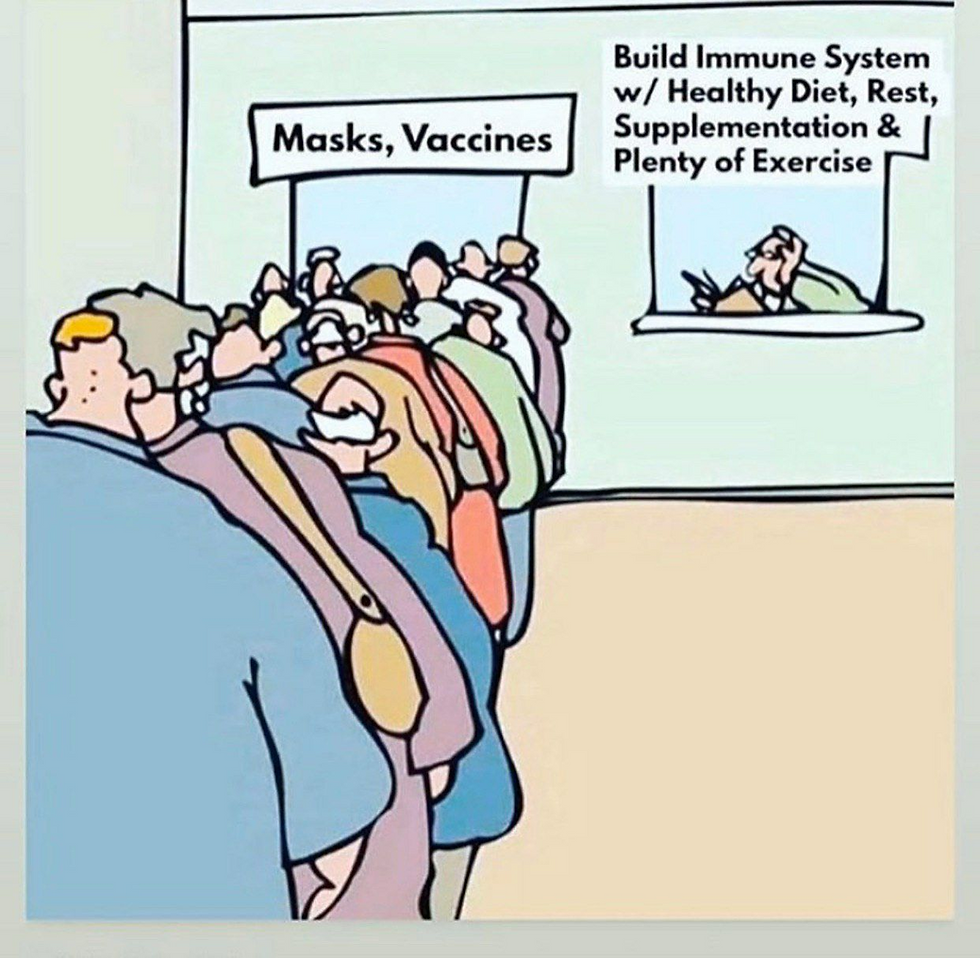
PS: What would a free-ranger be doing? Hint:


Thanks Gary - I had forgotten about that rogue classification -great video!
Hi Gary,
Your article was a very interesting read in regard to the reporting that the people who were mRNA injected and died or become ill within the first 14 days of receiving their mRNA injection where listed as un-vaccinated people. He'll just how low can one go in just lying like that?
It shows that these people breading and the home life up bringing as very poor parenting indeed.
Yes, Garry you are doing a great job in writing your articles, thank you.
Don Sinclair
Tahakopa Valley in the deep South of NZ
Well researched and very true. Keep up the good work.
The tide is slowly turning eg. Stev Kirsch’s offer of a million dollars to anyone who can prove that his research that the vaccine directly or indirectly has killed more people than it has saved is incorrect. No one has taken up the offer.
Never never give up.
Peter Sewell (touring Sicily)
I loved the cartoon Gary!🤣Also Barry Young's data on Covid Batches that were killer shots would have been classified as the unvaccinated of course if the recipients lived beyond 14 days! Pfizer like you stated had the jabbed up as unvaxxed until 14 days after shot 2, I believe was reported? Talk about misleading the public! Mr Potato Head Luxon , Seymour and Peters aren't concerned with the Cull or have voiced no comments on these Vax deaths, MP's had the choice to take the shot, why did they need a choice if it was safe and effective?😱 I didn't take the shot, instead I got hate mail, hate texts, ostracized and isolated instead for speaking out. Keep up t…
It was noted that the hyperlinks to the sources mentioned in this article were mostly damaged and led to dead ends. I was faced with the dilemma of either taking down the article or making a prompt revision by eliminating the faulty references. I have chosen to do the latter and will fix the references at a later time. Please accept my apologies for any inconvenience caused.